Hard music cuts scream amateur—especially when swapping royalty-free beds mid-video. DaVinci Resolve Fairlight gives precise fade curves and crossfades that make tracks from FreeBeatHub feel like one continuous score.
Fade Types in Fairlight
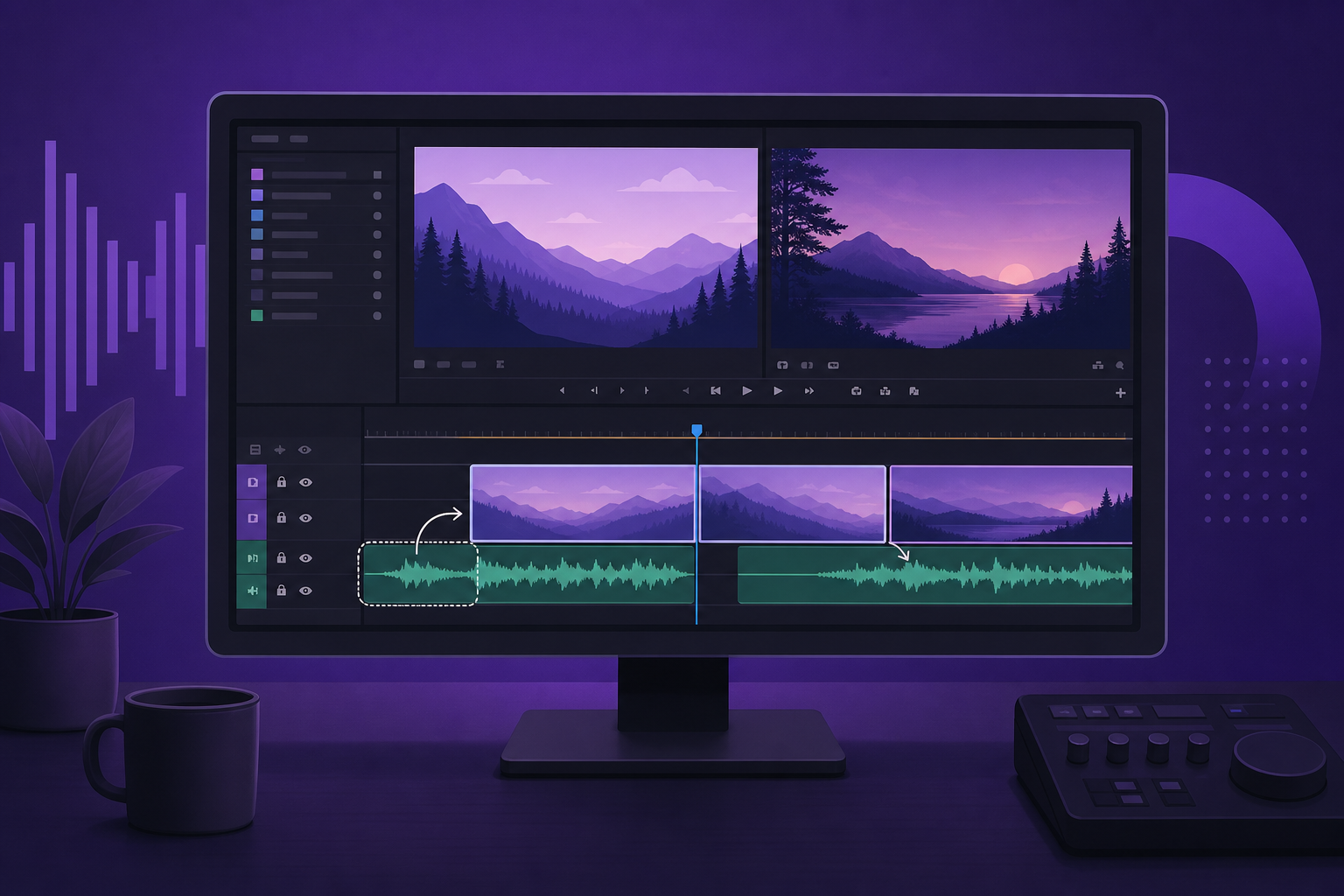
Resolve offers fade-in/out handles on clip edges, crossfades between overlapping clips, and keyframed volume automation. For music beds, overlap + crossfade is cleaner than fade-out to silence then fade-in.
- Edge fades: clip start/end
- Crossfades: overlapping adjacent clips
- Keyframes: dynamic ducking under voice
- Auto-crossfade: enable in track header for quick edits
Crossfade Basics for Music Beds
Overlap clips 24–48 frames. Drag fade handles to create X-shaped crossfade. Listen for level dip in center—adjust overlap if crossfade sounds thin. Same-genre beds crossfade smoother than genre jumps.
Explore cleared tracks for crossfade basics for music beds on Browse Music, or read related video editing tips on our blog.
Log vs Linear Fade Curves
Linear fades sound mechanical—ear perceives volume drops unevenly. Logarithmic (S-curve) fades match human hearing. In Fairlight, right-click fade → adjust curve type. Outgoing: slow start, fast end. Incoming: opposite.
Creators often skip log vs linear fade curves until a claim or muted VOD forces a fix; handling it proactively takes less time than a reshoot.

Explore cleared tracks for log vs linear fade curves on Browse Music, or read related video editing tips on our blog.
Aligning Fades to Beats
Place crossfade center on downbeat when swapping similar BPM tracks. Mark beats with M key on music track. Misaligned crossfades create rhythmic hiccup viewers feel but cannot name.

Volume Automation With Keyframes
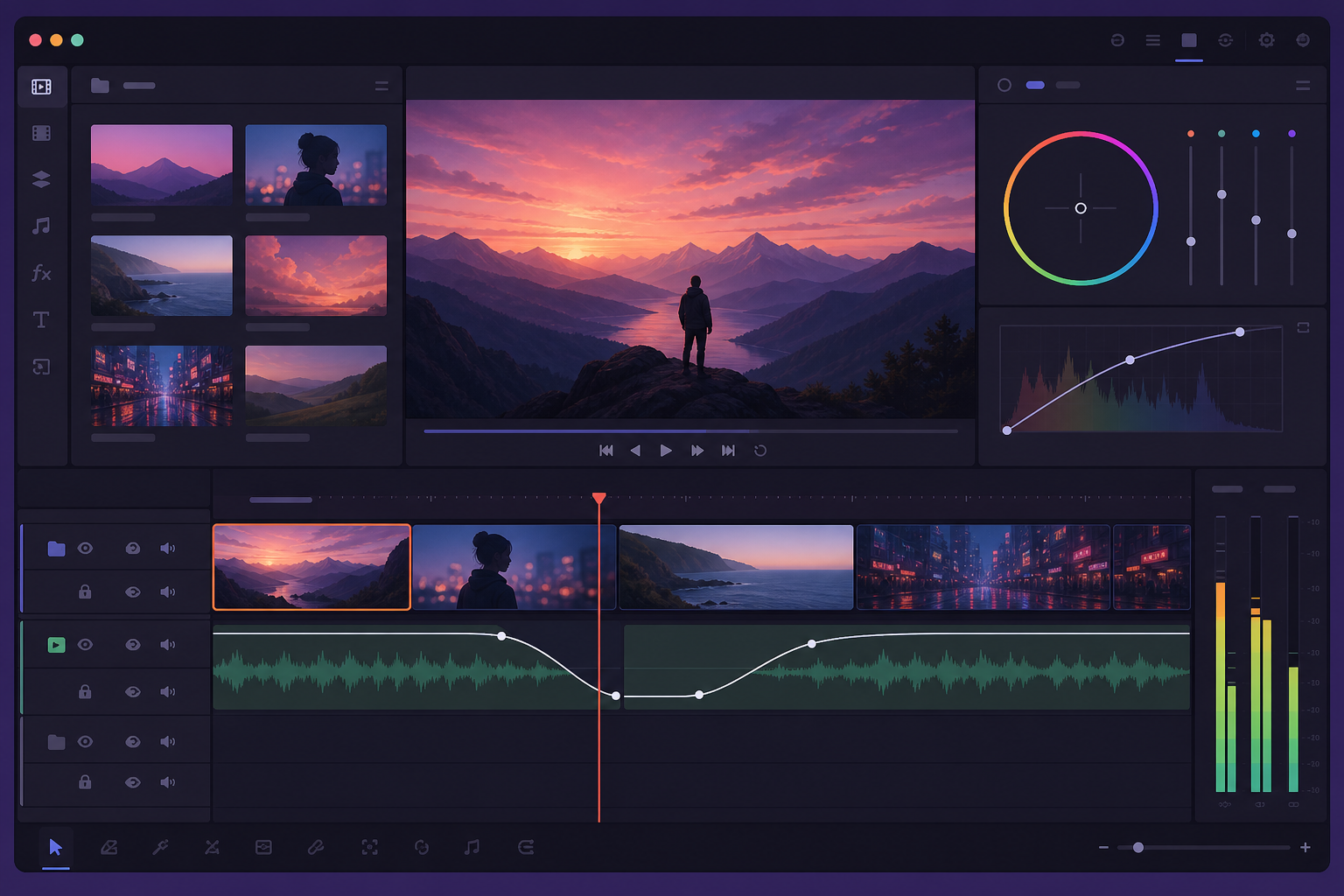
For dialogue ducking: enable volume keyframes on music track, drop 12–18 dB under speech, restore on pauses. Smoother than static crossfade when voice is intermittent.
Fade beds 2–3 seconds before key statements. Hard dips feel cinematic; instant mutes feel like editing mistakes.

Compare two versions of volume automation with keyframes in an unlisted test if stakes are high; small audio tests prevent expensive public mistakes.
Resolve Music Fade Workflow
- Lay all music beds on dedicated track
- Overlap transitions 1–2 seconds
- Apply log crossfades, adjust curves
- Mark downbeats, nudge overlap to align
- Keyframe duck under dialogue
- Export, check on phone speaker
Archive a "winners" playlist of ten tracks that performed well. Future you starts from proof, not a blank search bar.
Compare two versions of resolve music fade workflow in an unlisted test if stakes are high; small audio tests prevent expensive public mistakes.
Fade Mistakes to Avoid
- Fade to silence between every scene—choppy pacing
- Linear curves on music— sounds robotic
- Crossfade longer than 3 seconds on Shorts
- Genre clash with short crossfade—use sting bridge instead
- Ignoring clip gain before fading— peaks still clip
The hidden cost of "good enough" audio
Most mistakes below feel minor in the edit bay and expensive in analytics. A viewer who mutes once rarely comes back to unmute.
When fade mistakes to avoid clicks with your audience, save the track name and settings—you will reuse them faster than searching from scratch.
Save this guide to your bookmarks and revisit it when analytics dip—often the fix is pacing, not topic.
Explore related posts on the FreeBeatHub blog and build a small playlist of cleared favorites on Browse Music.
Consistency matters more than chasing perfect tracks. Publish with cleared audio, measure results, and refine one variable next time.
Key takeaways
- Treat resolve audio fades audio as part of retention, not decoration.
- Prefer a small cleared playlist over random trending sounds.
- Keep voice primary; music should support emotion without masking speech.
- Follow FreeBeatHub license terms and keep a download record.
- Revisit levels after you add captions or loud effects.
| Transition | Overlap | Curve | Use Case |
|---|---|---|---|
| Same bed loop | 12 frames | Log | Seamless extend |
| Genre swap | 48 frames + sting | Log | Topic shift |
| VO duck | Keyframes | Linear OK | Speech sections |
| Short-form | 6–12 frames | Log | Reels / Shorts |
Ready to find your soundtrack? Browse 600+ royalty-free tracks on FreeBeatHub.
Browse Free MusicAdvertisement
Frequently Asked Questions
How long should a music crossfade be in Resolve?
For background beds, 1–2 seconds (24–48 frames at 24fps). For stings and hits, 6–12 frames. Match to musical phrase length.
Linear or logarithmic fade curves?
Use log fades for natural music exits—linear fades sound abrupt to human ears. Fairlight defaults can be adjusted in fade handles.
Can I crossfade between different BPM tracks?
Yes if crossfade spans 2–4 bars and you align downbeats manually. Misaligned BPM crossfades need longer overlap or a transitional sting.
Does Resolve have auto-ducking for music?
Fairlight supports dynamics and sidechain. For simple ducking, keyframe volume on music track under dialogue.