Instagram Stories disappear in twenty-four hours, but your audio choices linger in how viewers remember your brand. Stories music must hook in the first second, survive muted autoplay, and stay copyright-safe when you add link stickers or product tags. This guide shows how to choose royalty-free beds from FreeBeatHub that fit the vertical, ephemeral format without feeling disposable.
How Stories Audio Actually Plays
Stories audio behaves differently from feed posts. Viewers tap through quickly, often with sound off until something visual or textual pulls them in. When sound does play, it starts mid-scroll—not from a deliberate play button press.
That means your music must communicate mood even when viewers only catch half a second before swiping. Strong transients, recognizable genre cues, and consistent volume across a Story sequence matter more than cinematic slow builds.
- Autoplay often begins mid-phrase—avoid long silent intros
- Phone speaker frequency response favors mids over sub-bass
- Multi-frame sequences need consistent loudness between slides
- Link and poll stickers should not compete with vocal hooks in the bed
Fade beds 2–3 seconds before key statements. Hard dips feel cinematic; instant mutes feel like editing mistakes.
Syncing Music to Stickers and Text
Treat each Story frame like a beat in a mini edit. Place text reveals and poll stickers on downbeats or snare hits so the sequence feels intentional rather than random.
If you use countdown stickers or product tags, align the musical swell to the moment the sticker animates in. Browse pop and corporate tags for beds with predictable four-on-the-floor patterns that are easy to mark in your editor.
Frame-by-frame marking
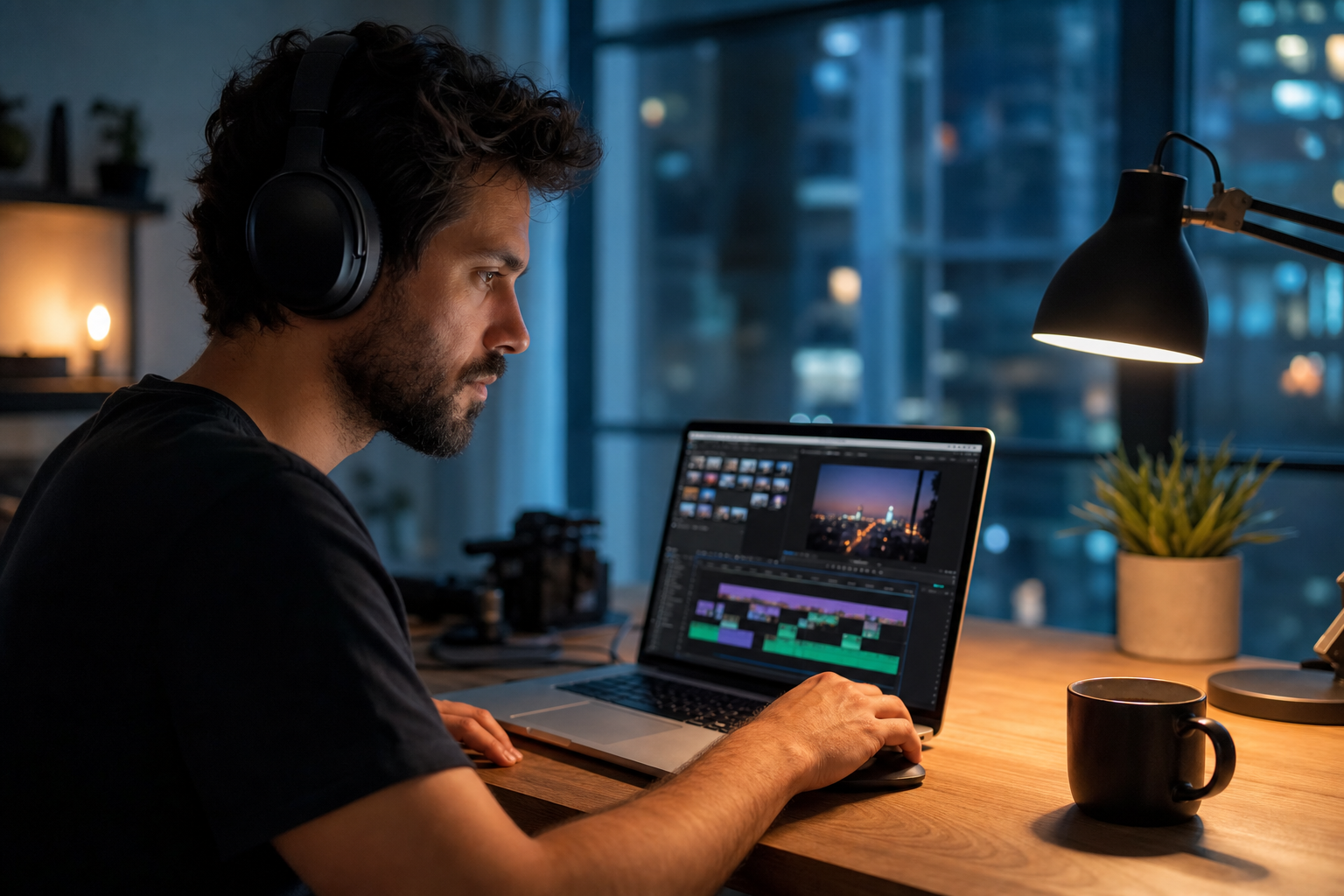
Export a rough Story sequence to your NLE, add beat markers, then rebuild in Instagram with timing notes. Even a two-frame product tease feels premium when the second slide lands on a harmonic change.
Putting syncing music to stickers and text into practice
Building a Three-Frame Story Arc
High-performing Story sequences often follow hook → proof → CTA across three frames. Music should escalate slightly: frame one hits hard, frame two holds energy under text, frame three resolves into a softer tail for link taps.
Avoid switching tracks mid-sequence unless you are deliberately signaling a tone shift. Consistency reads as production value; random track swaps feel like accidental uploads.
- Frame 1: opening transient + bold visual hook
- Frame 2: sustain energy under detail or testimonial
- Frame 3: resolve chord + CTA sticker on the downbeat
Putting building a three-frame story arc into practice
Designing for Muted Autoplay
Assume fifty percent of viewers start muted. Large kinetic text, high-contrast motion, and captions carry the hook—but your music choice still influences rewatch behavior when sound turns on.
Pick beds with clear rhythmic identity so viewers who enable sound mid-sequence instantly understand the vibe. Avoid tracks that only work with full-frequency playback; phone speakers strip sub-bass that many EDM drops rely on.
Stories music should reward the viewer who turns sound on, not punish the one who stays muted.
Putting designing for muted autoplay into practice
Curating a Story Music Playlist
Build a dedicated Story palette of eight to twelve cleared tracks sorted by energy level. Tag each with BPM and mood so you can grab a bed in under sixty seconds during a live campaign. Batch-license weekly to stay ahead of product drops—see our batching workflow for the full system.
Rotate beds monthly to avoid audience fatigue while keeping two to three signature sounds for brand recognition. Document which tracks pair with sales, behind-the-scenes, and education Story types.

Putting curating a story music playlist into practice
Stories Music Mistakes to Avoid
The fastest way to lose Story engagement is treating music as an afterthought. Copyright strikes, jarring volume jumps between frames, and beds with vocals that clash with the on-screen text are all preventable.
- Using Reels-length intros on a three-frame Story
- Uncleared trending audio on branded Story ads
- Inconsistent LUFS between consecutive Story slides
- Vocal-heavy beds under long text overlays
- Ignoring replay fatigue on looped fifteen-second beds
The hidden cost of "good enough" audio
Fixing audio in post costs more time than choosing the right bed upfront. These errors also compound when you repurpose content to other platforms with stricter enforcement.
Share your audio checklist with anyone who edits your content. Alignment prevents last-minute track swaps that break rights.
Key takeaways
- Treat instagram stories music audio as part of retention, not decoration.
- Prefer a small cleared playlist over random trending sounds.
- Keep voice primary; music should support emotion without masking speech.
- Follow FreeBeatHub license terms and keep a download record.
- Revisit levels after you add captions or loud effects.
| Story Type | Mood | BPM | Music Tip |
|---|---|---|---|
| Product drop | Punchy / Hype | 120–135 | Hit on frame-one product reveal |
| BTS | Warm / Lo-fi | 85–100 | Soft drums, leave room for VO |
| Poll / Q&A | Mid-energy | 95–110 | Stable loop, no vocal hooks |
| Link promo | Corporate | 90–105 | Resolve on final CTA frame |
Ready to find your soundtrack? Browse 600+ royalty-free tracks on FreeBeatHub.
Browse Free MusicAdvertisement
Frequently Asked Questions
Can I use the same track on Stories and Reels?
Yes, if your license covers both. Stories need shorter hooks and cleaner loops; Reels can carry longer builds. Export separate edits when pacing differs.
Does Instagram mute copyrighted Story music?
Stories can be muted or blocked when you use unlicensed commercial tracks. Royalty-free beds from FreeBeatHub stay clear when license terms are followed.
What length works best for Story music?
Most effective Story beds run 8–15 seconds with a clear opening hit. Loop-friendly sections matter because viewers often replay before tapping forward.
Should Story music be louder than Reels music?
Stories compete with UI sounds and notifications. Target slightly punchier transients, but keep dialogue-forward moments ducked 12–18 dB under voice.