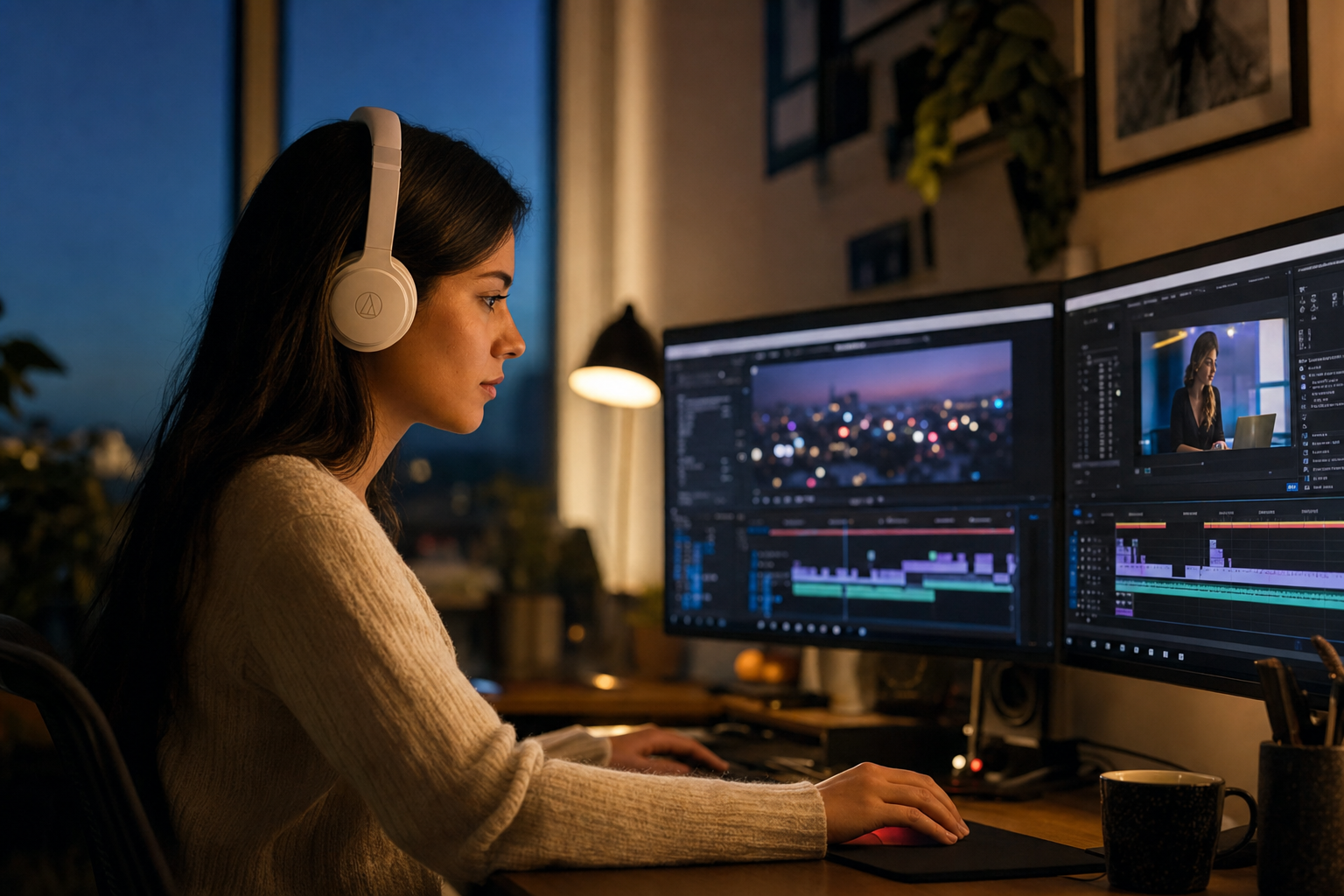
Night edits hit different—fewer notifications, deeper focus, and a tendency to over-correct color at 1 a.m. The wrong soundtrack turns that flow into exhaustion. Evening edit music should steady your pace, not compete with timeline decisions. This guide covers royalty-free beds from FreeBeatHub that keep late sessions productive and copyright-safe when exports go live.
Why Night Edits Need Different Music
Daytime scoring chases retention hooks; night editing chases stamina. Your brain already processes hundreds of micro-decisions—cuts, captions, audio dips—so beds with constant drops or vocal hooks add cognitive load.
Evening sessions also skew toward detail work: J-cuts, color tweaks, chapter markers. Music that worked for a hype montage at noon feels abrasive when you are fine-tuning dialogue at midnight.
- Lower transient density reduces ear fatigue
- Predictable loops help rhythm without distraction
- Warm timbres support long focus blocks
- Avoid lyrics that hijack inner monologue
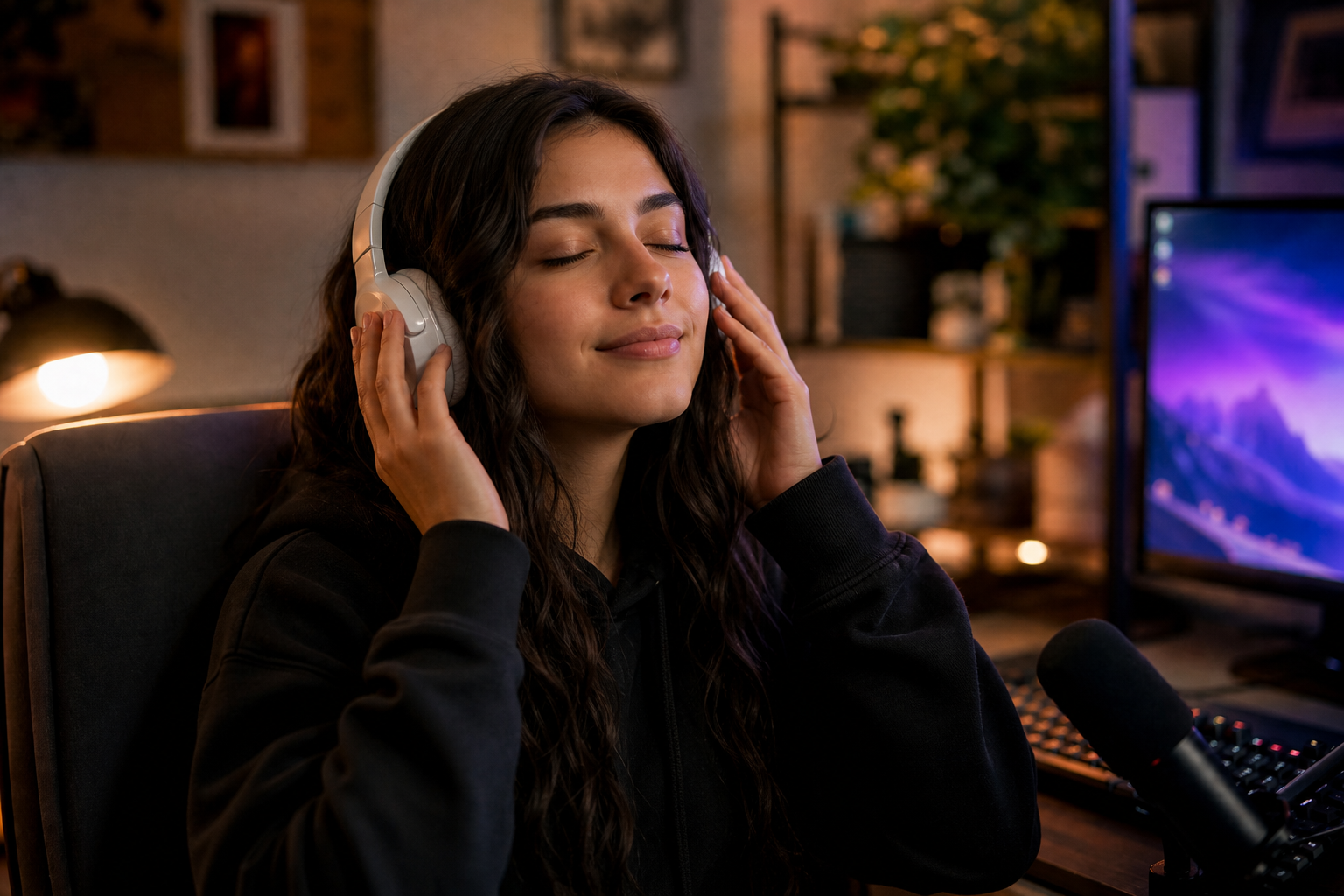
Fatigue-Proof Beds for Long Sessions
Pick loop-stable tracks in the 80–95 BPM range with minimal harmonic surprises. Browse lofi and ambient collections for beds that survive two-hour stretches without annoyance.
Test a candidate loop twenty times before committing. If any element—hi-hat pattern, synth swell, vocal sample—catches your attention on repeat eleven, swap the track.
How to shortlist tracks quickly
Filter by mood first, BPM second. For evening edit music, start with two genres maximum—more options slow you down without improving results.
Browse cleared options on FreeBeatHub by genre tags—lofi, ambient, and corporate cover most creators use cases.
Evening Mix Levels and Ear Care
Headphone mixing at night tempts you to creep volume upward. Set a session ceiling—many editors cap headphones at 70–75% system volume and keep beds around -20 dB relative to dialogue references.
Take a five-minute silence break every forty-five minutes. Fatigue makes bright tracks sound dull, which triggers the urge to boost highs and cause morning regret.
Reference tracks for night
Keep one well-known mix you trust. A/B your export against it every hour. Drift happens gradually when beds sit too loud in the 200–500 Hz range.
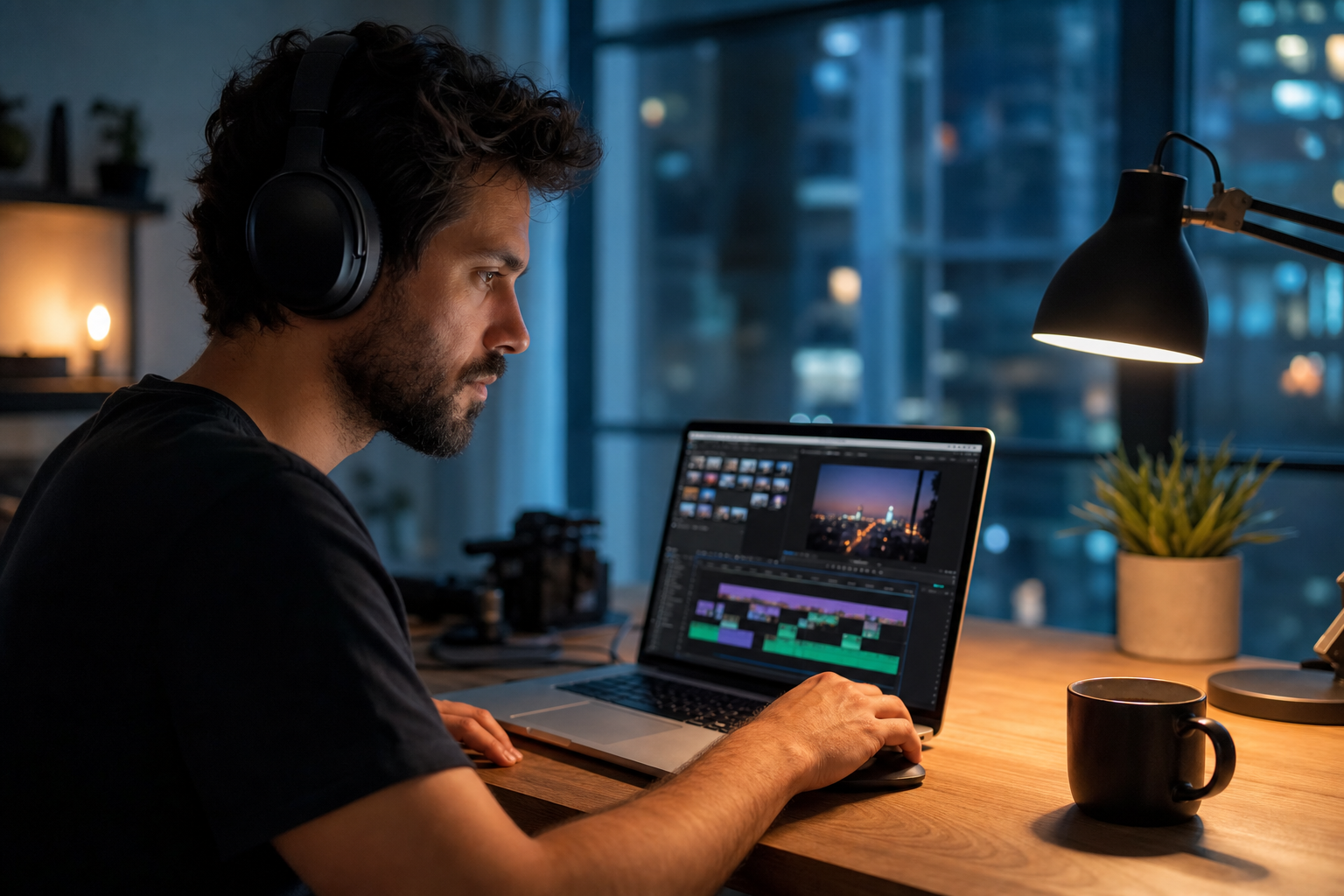
Building a Night Edit Palette
Curate eight to ten cleared tracks tagged by task: rough assembly, fine cut, color pass, export QC. Rough assembly can carry slightly more energy; export QC should be calmer so you catch clicks and pops.
Log BPM and mood in a spreadsheet. When you return next week, you skip the search rabbit hole and start editing in under two minutes.
- Shortlist five lofi/ambient tracks
- Eliminate two after twenty-loop test
- Tag survivors by edit phase
- Archive license ID beside each track name
How to shortlist tracks quickly
Build a "maybe" folder of five tracks and eliminate three on phone speakers. Mobile playback exposes harsh highs and muddy lows that studio headphones hide.
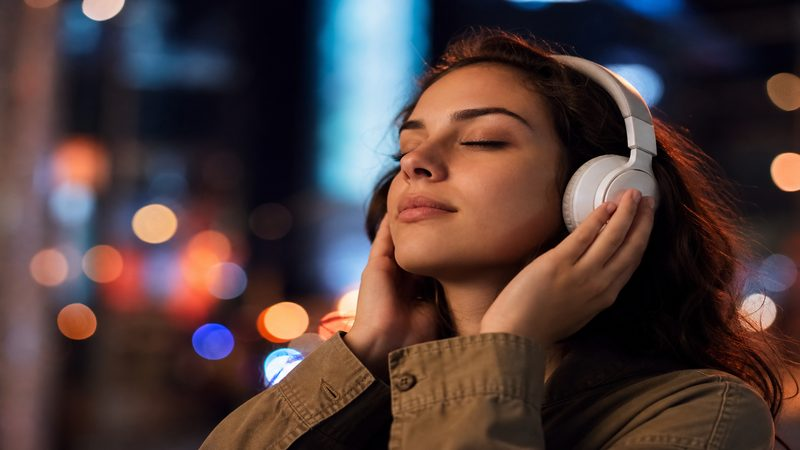
Evening Edit Music Workflow
Open your NLE, load the phase-appropriate bed, disable autoplay on new timeline imports if your software allows it—surprise audio spikes at midnight are brutal.
When you finish, mute the bed before final loudness pass. Night session music is for you during the edit; published videos may need different pacing. See our repurpose workflow if the same project ships multiple formats.
Archive a "winners" playlist of ten tracks that performed well. Future you starts from proof, not a blank search bar.
Night Session Music Mistakes
The biggest mistake is using the same hype Shorts bed for a four-hour rough cut. The second is forgetting license documentation because the track never appeared in the export—until you reuse it in the final video six weeks later.
- Hype EDM for detail editing after midnight
- Creeping headphone volume across the session
- Vocal samples that compete with your inner edit voice
- Skipping license logs because music feels temporary
- Publishing without re-checking levels in daylight
The hidden cost of "good enough" audio
Fixing audio in post costs more time than choosing the right bed upfront. These errors also compound when you repurpose content to other platforms with stricter enforcement.
Share your audio checklist with anyone who edits your content. Alignment prevents last-minute track swaps that break rights.
Document what worked in a single line per video. Patterns emerge faster than you expect.
Key takeaways
- Treat evening edit music audio as part of retention, not decoration.
- Prefer a small cleared playlist over random trending sounds.
- Keep voice primary; music should support emotion without masking speech.
- Follow FreeBeatHub license terms and keep a download record.
- Revisit levels after you add captions or loud effects.
| Edit Phase | Mood | BPM | Music Tip |
|---|---|---|---|
| Rough assembly | Mid lofi | 85–95 | Slight pulse, no vocal hooks |
| Fine cut | Ambient | 70–90 | Minimal percussion |
| Color pass | Soft piano | 60–80 | Almost invisible under focus |
| Export QC | Near-silent bed | N/A | Or mute entirely |
Ready to find your soundtrack? Browse 600+ royalty-free tracks on FreeBeatHub.
Browse Free MusicAdvertisement
Frequently Asked Questions
Should night edit music be louder or quieter?
Keep integrated loudness moderate—around -18 LUFS on headphones. Aggressive hype tracks fatigue ears faster during three-hour sessions.
Is lofi the only genre for evening edits?
Lofi and ambient dominate, but soft cinematic and minimal piano work too. Avoid vocal-heavy or high-transient EDM after 10 p.m.
Can I reuse night session beds in published videos?
Yes, if licensed royalty-free. Many creators use the same cleared tracks for personal edit sessions and final exports.
Does music choice affect edit speed at night?
Steady BPM beds reduce decision fatigue. Tracks with unpredictable drops pull attention away from timeline work.