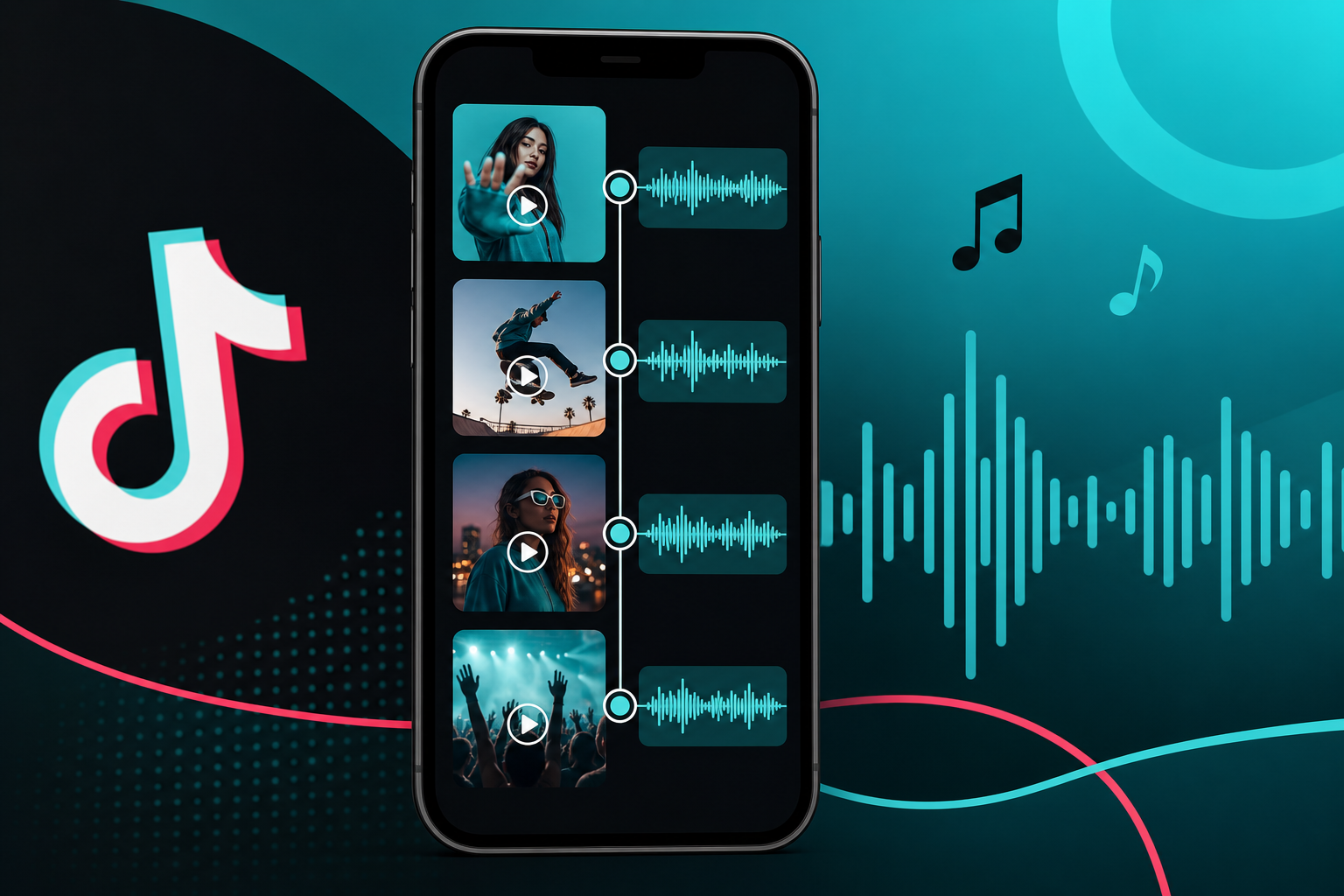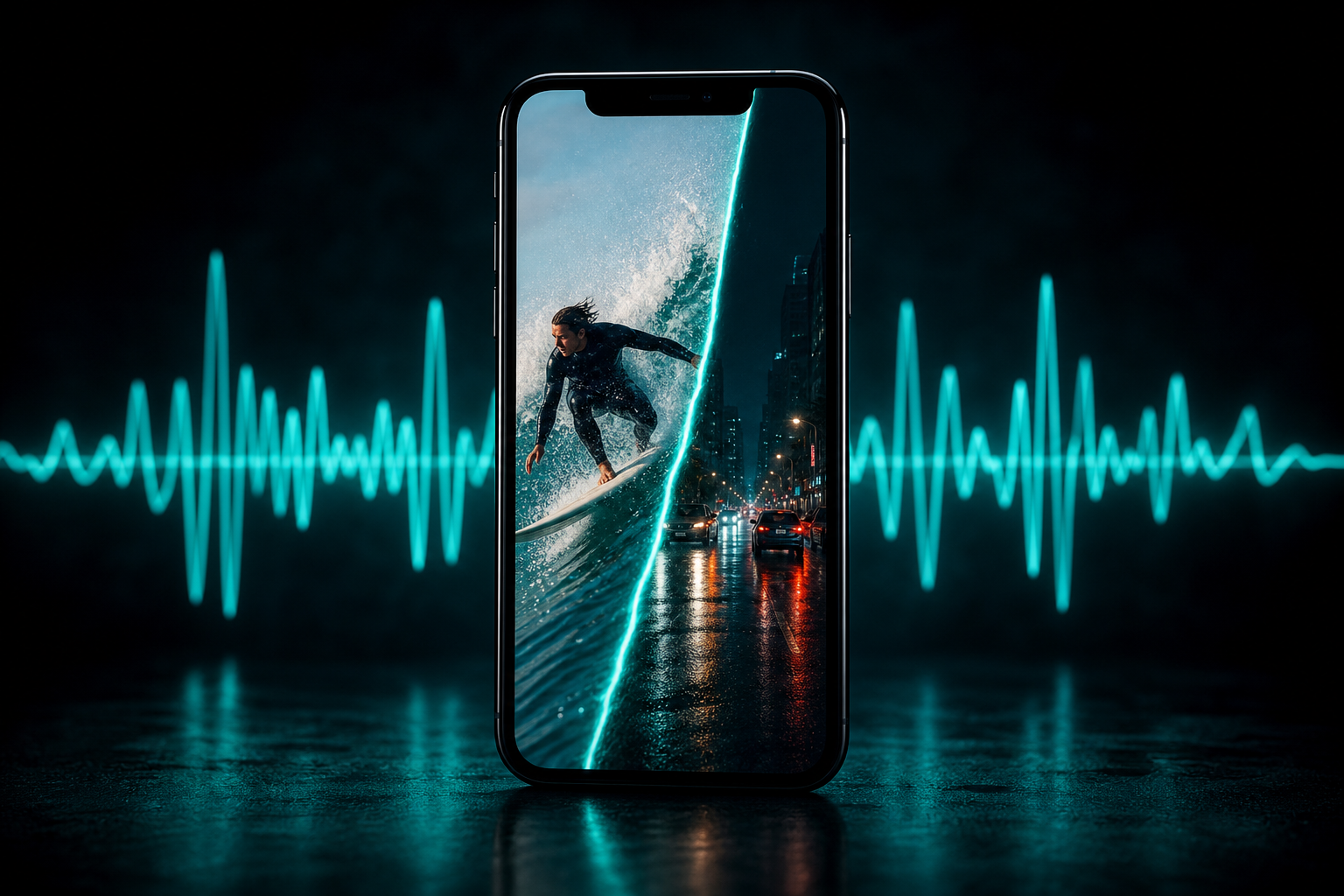
Great transitions look like magic; great transition audio sells the illusion. A downbeat hit on the cut frame doubles perceived edit quality. Royalty-free tracks from FreeBeatHub give you repeatable hits without copyright risk.
Why Transitions Need Musical Hits
The eye follows the ear. A swipe or match cut without audio feels like a glitch. A synced hit makes amateur phone footage feel like a produced edit—completion rate follows.
- Masks imperfect visual transitions
- Creates rhythm across multi-shot TikToks
- Builds recognizable series formatting
- Works with cleared music for brand accounts
Choosing Transition Hits
Pick tracks with obvious transients every 2–4 bars. EDM snares, trap hi-hat rolls ending in silence, cinematic impacts. Avoid beds with no rhythmic landmarks—you will fight the waveform.

How to shortlist tracks quickly
Build a "maybe" folder of five tracks and eliminate three on phone speakers. Mobile playback exposes harsh highs and muddy lows that studio headphones hide.
If two tracks feel equal, pick the one with cleaner loop points. Edits get faster when you are not fighting abrupt endings every forty-five seconds.
Syncing Cuts to Downbeats
In CapCut: auto beat → manual adjust → cut on marker. Pre-lap audio 2 frames before visual for ear-leads-eye effect. See CapCut beat sync guide.
Putting syncing cuts to downbeats into practice

Whoosh vs Stab vs Drop
Whoosh: location changes. Stab: outfit reveals. Drop: before/after reveals. Extract each from longer royalty-free tracks—one download, many SFX.
Putting whoosh vs stab vs drop into practice
Mixing Transition Sounds
Peak transition hits at -6 to -10 dBFS. Bed underneath at -18 dB. Do not stack three SFX on one cut—one clear hit wins.

Test with a friend who has not seen the project. If they lean in to hear dialogue, the bed is still too loud.
Transition Music Workflow
- Select track with clear downbeats
- Mark beats in editor
- Film transitions to hit count
- Extract reusable hit samples to library folder
- Publish, track completion vs non-synced version
After publishing, note one metric to revisit: average view duration, chat messages per minute, or save rate. Tie music changes to outcomes instead of taste alone.
Transition Mistakes
- Cut off-beat—feels sloppy instantly
- Copyrighted meme whoosh on brand TikTok
- Transition hit louder than entire video
- No bed under transitions—hits float awkwardly
- Different random hit every cut—no series identity
The hidden cost of "good enough" audio
Most mistakes below feel minor in the edit bay and expensive in analytics. A viewer who mutes once rarely comes back to unmute.
Share your audio checklist with anyone who edits your content. Alignment prevents last-minute track swaps that break rights.
Document what worked in a single line per video. Patterns emerge faster than you expect.
Consistency matters more than chasing perfect tracks. Publish with cleared audio, measure results, and refine one variable next time.
Key takeaways
- Treat tiktok transition music audio as part of retention, not decoration.
- Prefer a small cleared playlist over random trending sounds.
- Keep voice primary; music should support emotion without masking speech.
- Follow FreeBeatHub license terms and keep a download record.
- Revisit levels after you add captions or loud effects.
| Transition Type | Sound | Sync Point | Source |
|---|---|---|---|
| Hand swipe | Whoosh + snare | Mid-swipe | Electronic bed |
| Outfit change | Stab | Reveal frame | Trap / EDM hit |
| Before/after | Drop | Split frame | Cinematic impact |
| Location jump | Riser end | Land frame | Build-up section |
Ready to find your soundtrack? Browse 600+ royalty-free tracks on FreeBeatHub.
Browse Free MusicAdvertisement
Frequently Asked Questions
What makes a good TikTok transition sound?
A clear transient on the cut frame—snare, riser end, or bass hit. Viewers should feel the transition before they see it.
Should I use separate SFX and music?
You can layer a 0.5s SFX on a beat from a royalty-free track. Keep sources cleared—avoid random meme SFX for brand accounts.
How do I find BPM for transition edits?
Use CapCut beat detect or tap tempo. Mark every downbeat before placing transition cuts.
Can transition sounds be reused?
Yes. Reusing the same hit builds series recognition—especially for outfit change or location jump formats.