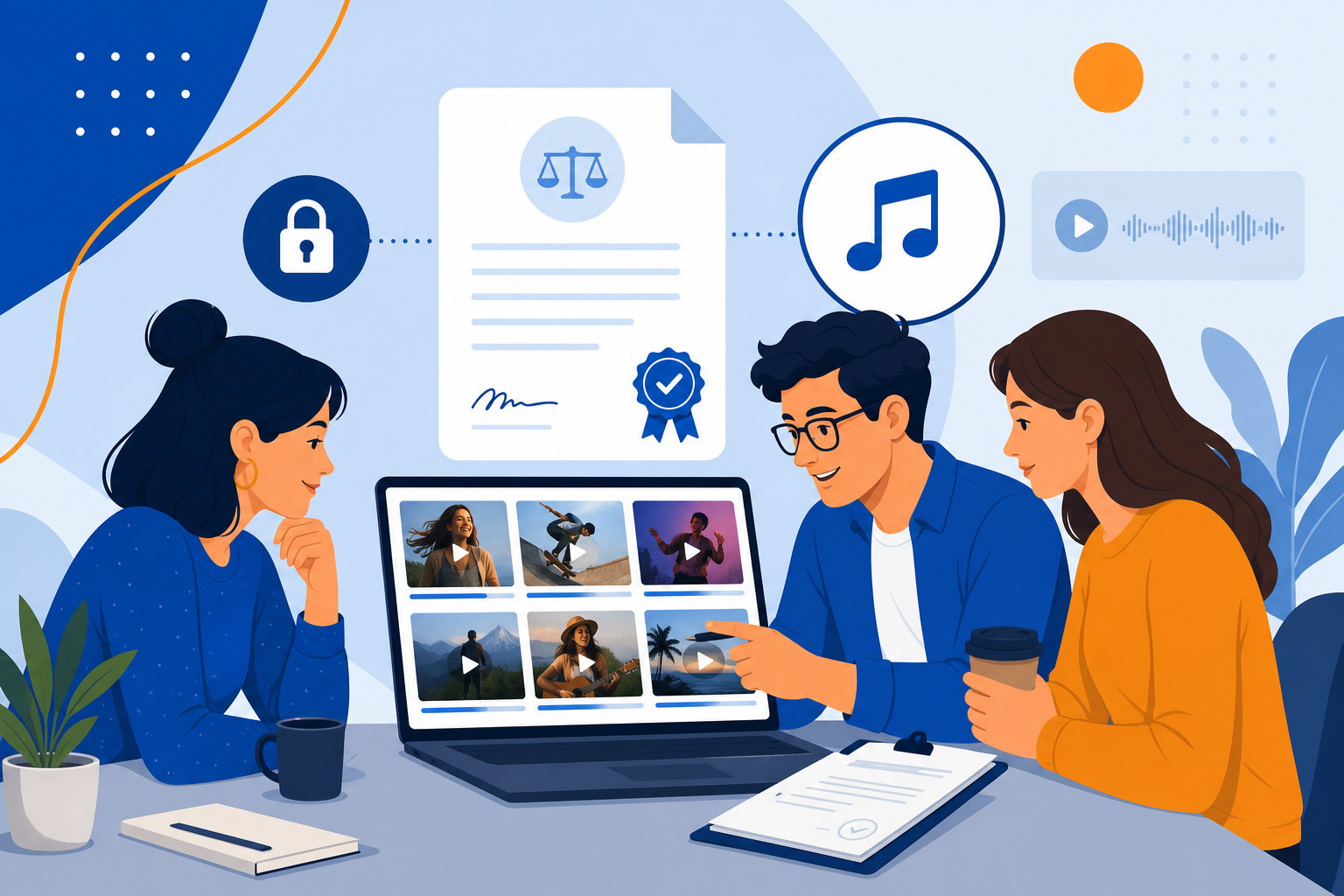
Influencer campaigns fail in post when creators submit videos scored with trending—but uncleared—audio. A tight music brief with approved royalty-free tracks from FreeBeatHub eliminates reshoots, speeds approval, and keeps whitelisted ads live.
Why Music Briefs Matter
Creators optimize for organic reach; brands optimize for paid clearance. Without explicit audio direction, both lose. Briefs align incentives: creators get usable specs, brands get deployable assets.
- Reduces approval cycles by 40–60% on average campaigns
- Prevents trending-sound whitelisting failures
- Builds consistent sonic identity across creators
- Documents compliance for legal review
Viewers decide whether to stay within seconds—and audio carries half that impression for brand and marketing teams.
Essential Brief Components
- Approved track list with license IDs
- Mood + BPM targets per content format
- Prohibited sources (Spotify, TikTok trending, radio)
- Volume guidance (music under voice)
- Deliverable: raw + final with listed track name
Putting essential brief components into practice
The Approved Playlist Method
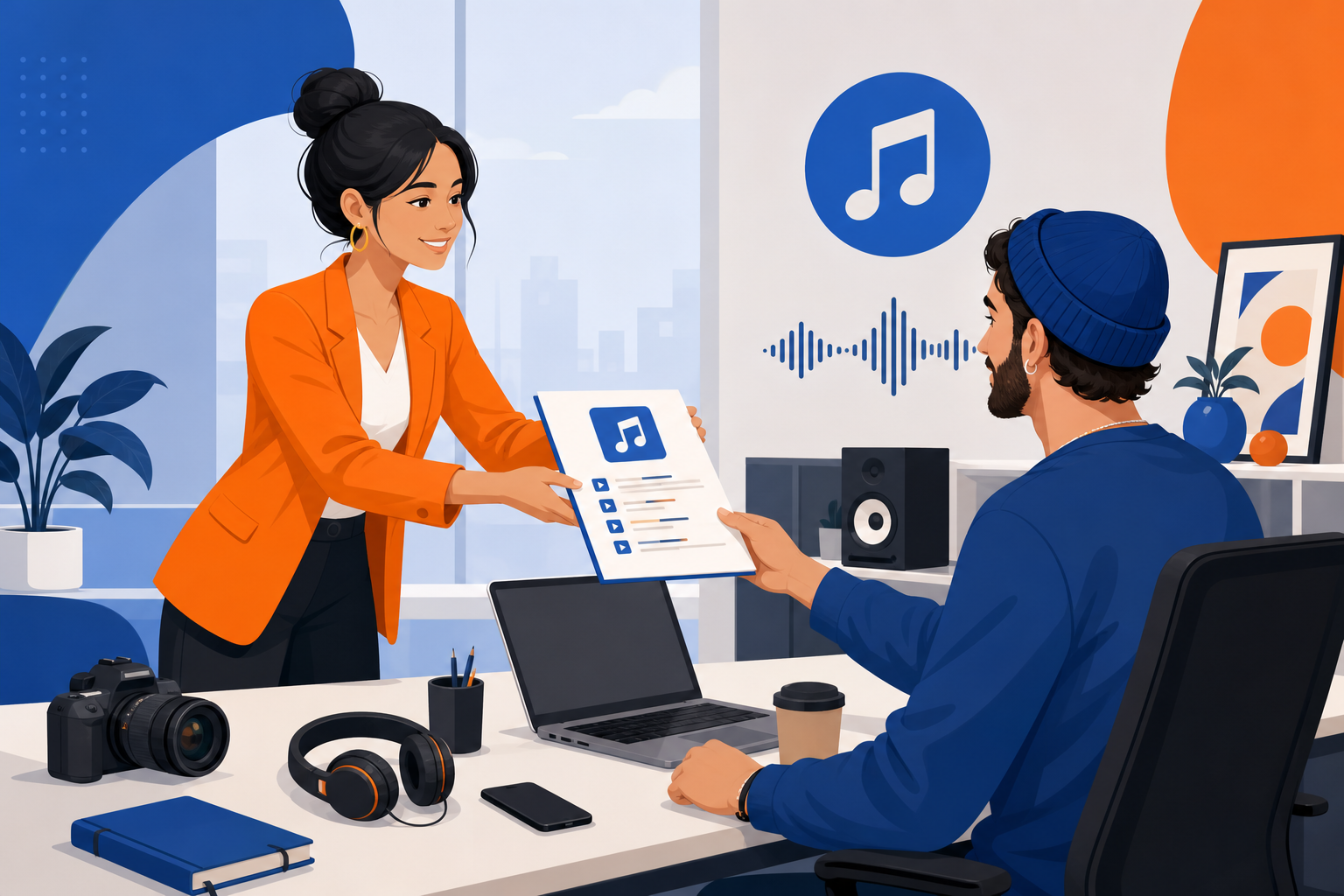
Curate 8–15 tracks on FreeBeatHub tagged by use case: unboxing, testimonial, tutorial, lifestyle B-roll. Share direct browse links. Creators pick within bounds; compliance stays automatic.
Putting the approved playlist method into practice
Brand and marketing teams often skip the approved playlist method until a claim or muted VOD forces a fix; handling it proactively takes less time than a reshoot.
Mood Language Creators Understand
Bad: "Make it feel exciting." Good: "Mid-energy corporate, 95–110 BPM, instrumental only, duck under voice." Reference a known brand sonic style if applicable—never reference copyrighted songs as targets.
Putting mood language creators understand into practice
If you are stuck between two options, choose the track that disappears under voice. Invisible beds rarely lose viewers; flashy ones often do.
Usage Rights in Plain English
State: organic post OK, paid whitelisting OK, territory (US/UK/global), flight dates, exclusivity window. Link to license terms. Creators ignore legalese—one bullet list works.
If the creator cannot pick a track in 60 seconds from your brief, the brief is too vague.
Putting usage rights in plain english into practice
Copy-Paste Brief Template
Music: Use ONLY tracks from [playlist link]. List track name in delivery notes. No TikTok trending sounds. No Spotify. Music 15 dB under voice. Submit MP4 + track name + license screenshot. Questions: [contact].
Putting copy-paste brief template into practice
Brief Mistakes That Cause Reshoots
- No playlist—creators guess
- Conflicting mood adjectives ("calm hype")
- Missing whitelisting clause for Spark Ads
- No prohibition on trending platform sounds
- Approving video but not verifying final export audio
The hidden cost of "good enough" audio
Most mistakes below feel minor in the edit bay and expensive in analytics. A viewer who mutes once rarely comes back to unmute.
Share your audio checklist with anyone who edits your content. Alignment prevents last-minute track swaps that break rights.
Explore related posts on the FreeBeatHub blog and build a small playlist of cleared favorites on Browse Music.
The creators who win long-term treat music as part of their brand system—not a last-minute search before export.
Key takeaways
- Treat influencer music briefs audio as part of retention, not decoration.
- Prefer a small cleared playlist over random trending sounds.
- Keep voice primary; music should support emotion without masking speech.
- Follow FreeBeatHub license terms and keep a download record.
- Revisit levels after you add captions or loud effects.
| Brief Element | Include | Skip |
|---|---|---|
| Track source | Direct playlist URL | "Find something upbeat" |
| Mood | BPM + genre | "Like [artist name]" |
| Rights | Whitelisting + dates | Legal paragraph only |
| Delivery | Track name + proof | Video file alone |
Ready to find your soundtrack? Browse 600+ royalty-free tracks on FreeBeatHub.
Browse Free MusicAdvertisement
Frequently Asked Questions
Should brands let influencers pick their own music?
Only from a pre-approved playlist. Open selection leads to trending sounds that fail in paid whitelisting.
What mood descriptors work best in briefs?
Pair adjectives with BPM ranges and reference genres: 'warm corporate, 90–105 BPM, no vocals' beats 'fun and upbeat.'
Do briefs need license IDs?
Yes. Include track name, library source, license tier, and download date so legal can verify in one glance.
How many tracks should an approved playlist include?
8–15 tracks across 2–3 mood buckets gives creators choice without overwhelming compliance.