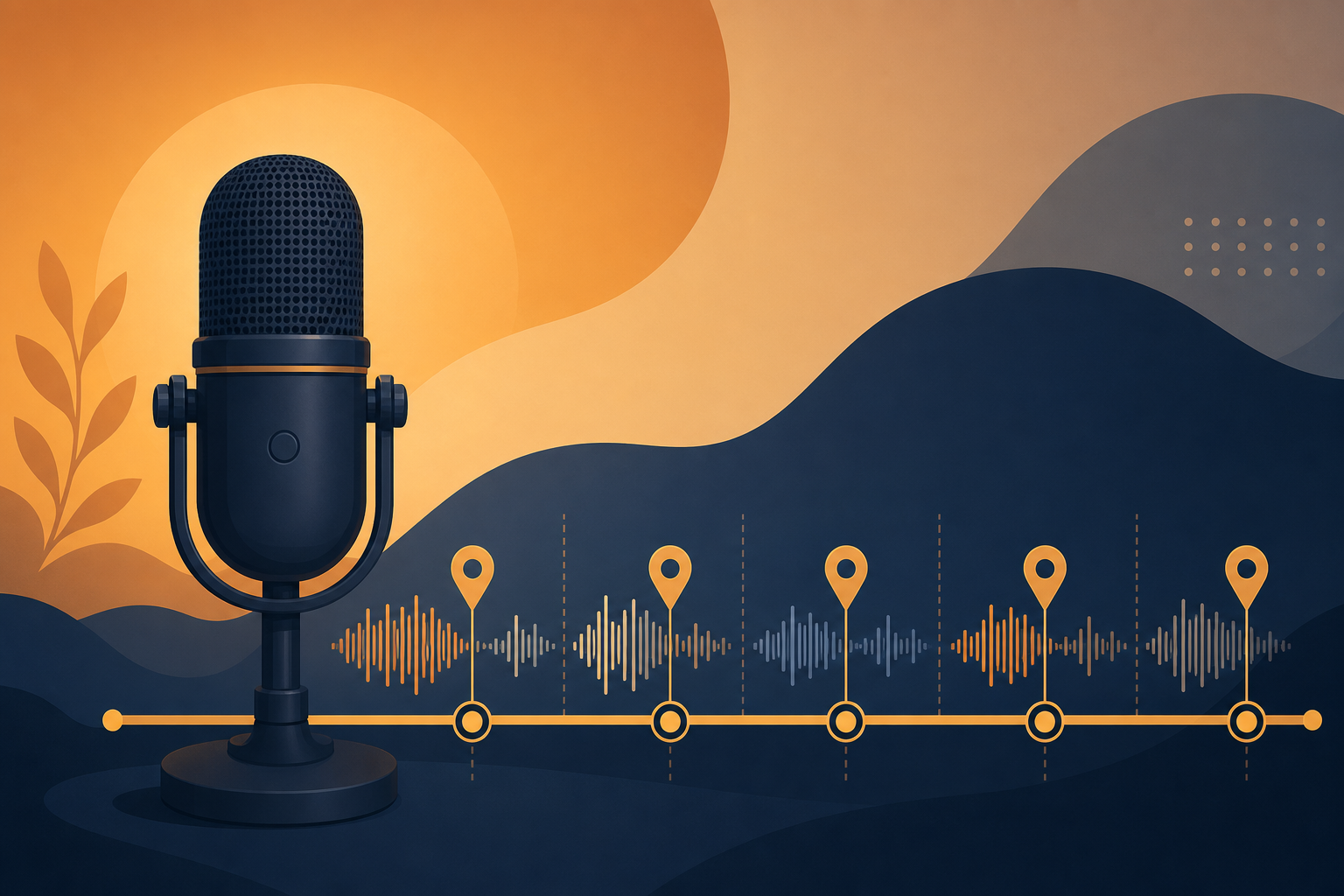
Long episodes live or die on navigation. Listeners scrub when topics blur together. Short chapter stings from a royalty-free library like FreeBeatHub mark transitions, sync with platform chapter markers, and make shows feel produced—not improvised.
Why Chapters Need Audio Cues
Chapter markers in Spotify and Apple Podcasts help SEO and UX. Audio stings reinforce those boundaries for listeners on platforms without visual chapters—car play, smart speakers, RSS players.
- Signals topic shift without host verbal filler
- Reduces listener fatigue on 60+ minute episodes
- Creates rhythm for interview-heavy shows
- Matches sonic brand when reused consistently
Compare two versions of why chapters need audio cues in an unlisted test if stakes are high; small audio tests prevent expensive public mistakes.
Designing Chapter Stings
Stings should be derivative of your intro—same key, shorter length, 30–50% lower energy. Instrumental only. Browse podcast collections for pre-edited short hits.

Putting designing chapter stings into practice
Compare two versions of designing chapter stings in an unlisted test if stakes are high; small audio tests prevent expensive public mistakes.
Where to Place Chapter Music
Standard spots: after cold open, before sponsor block, topic transitions, before outro. Avoid stings every 5 minutes—rhythm not wallpaper. Map stings to your outline before recording.
Putting where to place chapter music into practice
Compare two versions of where to place chapter music in an unlisted test if stakes are high; small audio tests prevent expensive public mistakes.
Mixing Stings With Dialogue
Fade sting tail under first word of next segment (J-cut style). Peak sting 6 dB below normal dialogue level. Leave 0.5s room tone gap if host starts immediately—prevents collision.

Explore cleared tracks for mixing stings with dialogue on Browse Music, or read related podcast tips on our blog.
Spotify and Apple Chapter Sync
Align sting timestamps with embedded chapter markers in your DAW. Export chapter JSON or use hosting tools that read ID3 tags. Mismatch between sting and marker confuses scrubbers.
Putting spotify and apple chapter sync into practice
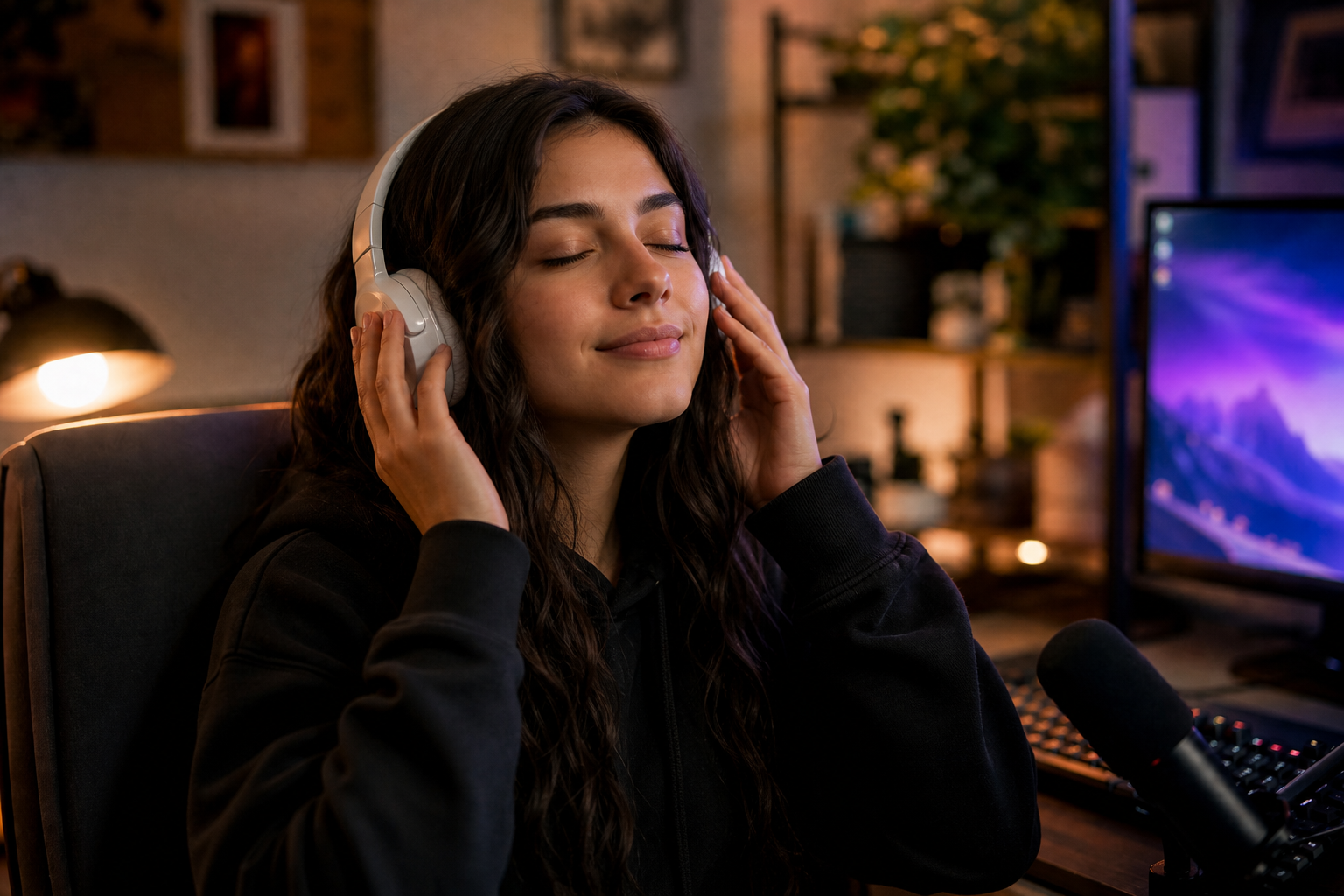
When spotify and apple chapter sync clicks with your audience, save the track name and settings—you will reuse them faster than searching from scratch.
Chapter Music Playbook
- Export 3 sting variants from intro motif (short, medium, sponsor)
- Label files with timestamp placeholders
- Drop stings during edit before leveling pass
- Verify on phone + car Bluetooth
- Log sting map template per show format
Putting chapter music playbook into practice

When chapter music playbook clicks with your audience, save the track name and settings—you will reuse them faster than searching from scratch.
Chapter Music Mistakes
- 30-second cinematic stings mid-episode
- Different random stock hit every chapter—no brand
- Sting louder than dialogue—startles listeners
- Vocal stings under host intro line
- No alignment with platform chapter timestamps
The hidden cost of "good enough" audio
Fixing audio in post costs more time than choosing the right bed upfront. These errors also compound when you repurpose content to other platforms with stricter enforcement.
Compare two versions of chapter music mistakes in an unlisted test if stakes are high; small audio tests prevent expensive public mistakes.
Save this guide to your bookmarks and revisit it when analytics dip—often the fix is pacing, not topic.
Explore related posts on the FreeBeatHub blog and build a small playlist of cleared favorites on Browse Music.
The creators who win long-term treat music as part of their brand system—not a last-minute search before export.
Key takeaways
- Treat podcast chapter music audio as part of retention, not decoration.
- Prefer a small cleared playlist over random trending sounds.
- Keep voice primary; music should support emotion without masking speech.
- Follow FreeBeatHub license terms and keep a download record.
- Revisit levels after you add captions or loud effects.
| Segment | Sting Type | Length | Energy |
|---|---|---|---|
| Topic change | Motif short | 2–3s | Mid |
| Sponsor block | Neutral bridge | 3–4s | Low |
| Guest entrance | Brighter variant | 3–5s | Mid-high |
| Outro lead-in | Resolved tail | 4–5s | Low |
Ready to find your soundtrack? Browse 600+ royalty-free tracks on FreeBeatHub.
Browse Free MusicAdvertisement
Frequently Asked Questions
How long should podcast chapter stings be?
Keep stings 2–5 seconds. Longer stings delay content and annoy binge listeners.
Should chapter music differ from intro music?
Use the same sonic family as your intro but shorter and lower energy—listeners should feel one brand.
Can chapter stings have vocals?
Avoid vocals in stings—they compete with host speech that often follows immediately.
Do chapter markers need music?
Not required, but audio cues improve navigation in apps and reduce mid-episode drop-off at topic shifts.